Measurements
Time Zone Conversions

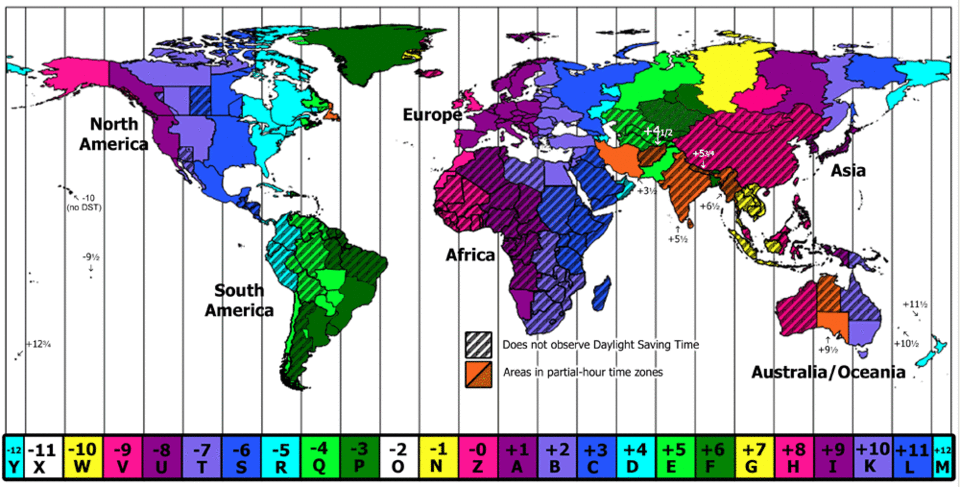
Most meteorological observations are reported in Coordinated Universal Time. We live in reference to local time. As a result, it’s important to know how to convert between time zones. Continue reading
Five Minute Meteorology: Wind Basics
Winds are measured using nautical miles per hour, or knots, and require both speed and direction measurements. Wind vane (direction) and anemometer (speed) are commonly used devices. Symbols on maps and graphs represent wind speed and direction. Wind is one of the state variables. Continue reading
Five Minute Meteorology: Barometric Pressure Basics
Barometric pressure is probably larger than you realize. Standard sea level pressure is 14.7 pounds per square inch. So, if the surface area of the top of your head measures about 175 square inches (the size of an average human head), then you have 2572.5 pounds of air weighing down your head all the time! Continue reading
Five Minute Meteorology: Temperature Basics
Have you ever tried to cook food at high altitude? You may have needed to add salt to your boiling pot of water.. but why? Continue reading


About Me
I’m an assistant professor of meteorology at a small university. This blog is meant to serve my students and anyone who finds it useful.
Recent Posts
Newsletter
[userfeedback id=1]
You must be logged in to post a comment.